


How to Choose Your First Half Marathon Goal Time

Updated: May 28
Choosing your first half marathon goal time can feel exciting and a little overwhelming. For many runners, signing up is the easy part; the bigger question is figuring out what your goal should actually be. Should you aim to simply finish, push for a specific time, or try to match what other runners are doing?
The truth is that your first half marathon goal should reflect your training, experience, and current fitness—not outside expectations.
A realistic goal time helps shape every part of your race preparation, from pacing and long-run strategy to taper planning and fueling, while building essential race-day confidence.
Whether you're preparing for a certified Minnesota spring half marathon like Camp Wanna or targeting a winter benchmark race like Half Fast Half, choosing the right target makes all the difference.
According to endurance training guidance from the American College of Sports Medicine, performance goals are most effective when they are individualized, realistic, and based on consistent training patterns.
Ultimately, the best first goal is not necessarily the fastest one, but the one that matches where your training has honestly prepared you to be.

Why Setting a Goal Time Matters
A half marathon goal does more than predict your finish line photo.
It gives structure to your preparation.
When you know your target pace, you can better plan:
Long-run effort levels
Practice race pace segments
Fuel timing
Taper adjustments
Race-day pacing strategy
Without a goal, runners often make one of two mistakes:
They either start too fast because adrenaline takes over—or hold back too much because they lack confidence in their pacing.
Both can lead to frustrating race experiences.
A thoughtful goal gives your race purpose.
If you're still working through race-week preparation, our Half Marathon Tapering Guide can help you align your final training weeks with your target effort.
Start by Looking at Your Training
The best indicator of your potential race performance is not wishful thinking.
It’s your recent training consistency.
Ask yourself:
Have You Been Running Consistently?
Consistency matters more than occasional standout workouts.
If you've maintained several weeks of steady training—including long runs—you have meaningful data to work from.
If training has been inconsistent, your goal may need to prioritize completion and experience over pace.
What Did Your Long Runs Feel Like?
Your long runs provide valuable feedback.
Pay attention to:
Your average sustainable pace
How controlled your effort felt
Whether you finished strong
How well you recovered afterward
A comfortable long-run pace often reveals more about race readiness than a single fast workout.
Have You Practiced Race-Day Fueling?
Goal pacing is closely connected to fueling strategy.
If you haven't yet dialed in that process, review our Half Marathon Fueling Guide to build confidence around race-day nutrition.
Use Recent Shorter Races as Benchmarks
Shorter races can help estimate half marathon readiness.
For newer runners, events like Shake Your Shamrock offer useful opportunities to assess pacing control and race-day effort.
A recent:
5K
7K
10K
can provide insight into sustainable pacing expectations.
What matters most is not comparing yourself to others.
It’s identifying effort levels that felt strong and repeatable.
Understand the Difference Between “Possible” and “Realistic”
Many first-time runners set goals based on ideal scenarios. But endurance racing rewards realism. There’s a difference between:
Possible: What might happen on your absolute best day
and
Realistic:What your training consistently supports
For your first half marathon, realistic almost always wins.
A well-executed conservative race often feels far more successful than an aggressive pacing gamble.
One of the most effective ways to approach your first half marathon is by setting layered expectations rather than locking yourself into a single finish time. Many experienced coaches and race preparation resources recommended by organizations like the American College of Sports Medicine suggest flexible goal setting because it allows runners to adapt to race-day conditions while staying focused and motivated.
A simple way to do this is by creating A, B, and C goals.
Your A goal is your ideal performance if everything goes smoothly—your pacing feels controlled, conditions are favorable, and your training translates exactly as planned. Your B goal is a realistic target based on your recent long runs and overall consistency. Your C goal is about finishing strong, staying composed, and completing the race feeling proud of your effort regardless of pace.
This framework reduces unnecessary pressure and gives you options if race-day variables shift.
Weather, course conditions, and adrenaline all influence pacing. A cool spring morning at Camp Wanna may feel very different from a colder winter race like Half Fast Half, and adjusting your expectations accordingly is part of smart racing.
It also helps to think about your goal time in terms of pacing comfort rather than just finish-line math. If your target requires running every mile faster than anything you’ve sustained comfortably in training, it may not reflect your current fitness. On the other hand, if your goal pace feels controlled and repeatable during longer efforts, that’s often a strong sign you’re on the right track.
Many first-time runners benefit from asking a simple question: Could I hold this pace while still feeling composed through the later miles?
That question often reveals more than spreadsheets or pace calculators.
Another useful perspective is to focus on effort rather than exact splits. The USA Track & Field emphasizes that endurance pacing is most effective when runners learn to balance objective pace targets with internal effort cues. Your body’s feedback matters.
If a pace feels forced in the opening miles, it’s worth adjusting.
If it feels sustainable and controlled, trust your preparation.
This is where your taper becomes especially important. If you’ve followed a structured reduction in training load—like the strategies outlined in our Half Marathon Tapering Guide—you may feel fresher and stronger on race day than you did during your final long training efforts. That extra freshness often surprises first-time runners in a positive way.

Fueling also plays a major role in whether a goal time remains realistic across all 13.1 miles. Even strong pacing can become difficult if energy intake is inconsistent, which is why reviewing your race-week strategy through our Half Marathon Fueling Guide can help support better decision-making.
It’s also worth remembering that your first half marathon does not need to define your future as a runner.
Many athletes use shorter races like Shake Your Shamrock as stepping stones, building race-day experience before taking on larger half marathon efforts later in the season. Others use their first 13.1 simply to learn, gather feedback, and establish a benchmark for future improvement.
That’s part of what makes choosing your first goal time so personal.
Success might mean finishing under a specific number.
It might mean running evenly.
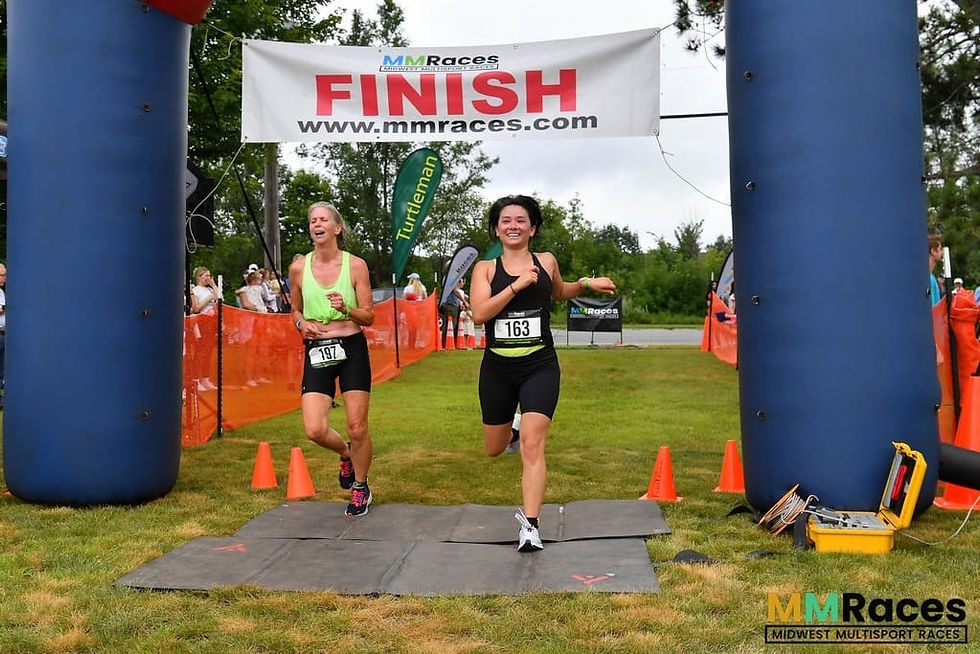
It might mean crossing the line smiling, knowing you paced yourself well and executed your plan.
The best first half marathon goal is one that reflects preparation, encourages confidence, and gives you something meaningful to work toward without creating unnecessary pressure.
If you're ready to test your pacing strategy on race day, events like Camp Wanna offer ideal opportunities to turn your training into experience.
Set a goal that challenges you.
Trust your training.
And remember that your first half marathon is only the beginning.

Comments